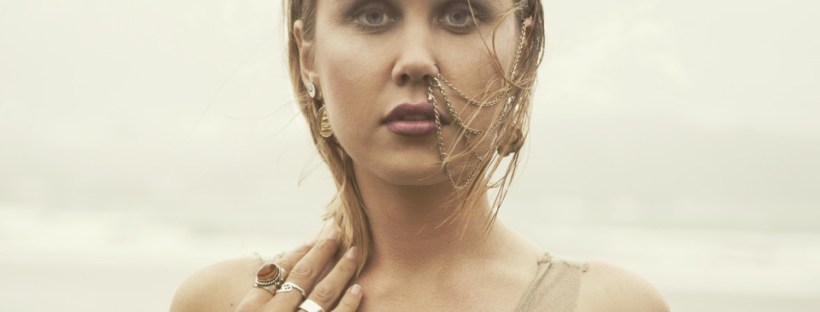
Josje Leyten, Gypsy Pirate: An Interview

I have a boat-crush on S/V Delos. The photogenic crew of this 53-foot Amel Super Maramu has been island hopping around the Pacific since 2009, and recently crossed the Indian Ocean from Asia to Africa, where they’re now cruising the coast. Their videos are full of endless tropical sunsets, brisk winds, idyllic beaches, and frequent laughter. I know how intoxicating life onboard a boat can be, and the nonstop fun they seem to have is enough to make you want to double-click on the “Buy us a Beer” icon on the website repeatedly, hoping if you do it enough they’ll let you come onboard and stay for a year or two…

standinggrass-B


But to everyone’s surprise, just this year, Josje Leyten, Gypsy Pirate, lifelong sailor and Dutch Kiwi who joined up with Delos five years ago and became a regular face in the videos, made the announcement that, after the Indian Ocean journey, she was chucking it all and flying home from Madagascar to New Zealand to begin a landlubber’s life. So long, Delos! What could possibly prompt someone to give up paradise at sea?

Why art, of course. On a long passage over the Indian Ocean, Josje had a moment of clarity, as tends to happen when we lie on deck and look at the stars. Her new venture, Ramatree, embodies its name by including many branches, including photography, fashion design and jewelry. I had to see some of it: wow! She is seriously talented.

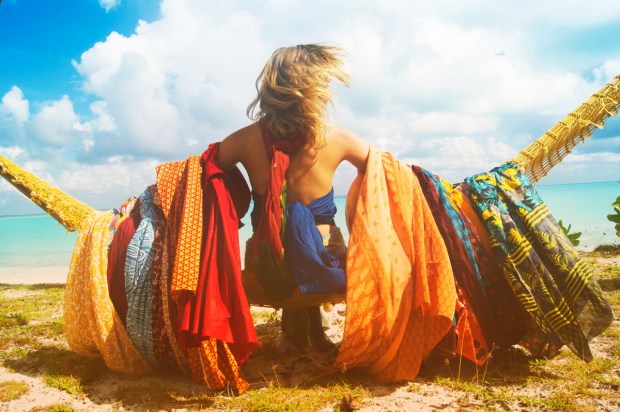
In her work, she incorporates vibrant oceanic colors, the textures of shells and driftwood, exotic cultures from her travels, and the hypnotic rhythms of waves:

And the bravery that she demonstrates by giving up her life at sea for an uncertain future truly embodies the pirate, no-quarter-given spirit I try to cultivate in my own life.

I had to find out more, so I asked Josje some questions, which she was kind enough to answer! Part 1 of her answers runs today:

Q: Does your time at sea influence your work, and if so how?

A: My whole tree of life has grown from inspiration that sailing across the oceans has given me. Wide-open spaces, time to think, to breathe, to reflect, to dream. Cultures to experience, different ways of being and living, absorbing vibes and experiencing different tribes have all been catalysts to planting this little seed that has formed my tree of life. I like my jewellery pieces unique, one off and handmade, from old treasures and hand picked collectibles.

The clothing I am designing is gypsy inspired from my nomadic wanders and sailing adventures. And I try to keep my creative writing as authentic and from the heart as possible, just the way nature intended. So yeah, I guess my time at sea has influenced me in huge ways, perhaps not necessarily so easy to explain, but in a more abstract way.

But mostly, the sea has taught me respect, authenticity and integrity. I want this inspiration to shine through my work and my being, because my time at sea has taught me that there is nothing you can pretend to be, the only thing you can do is be you and be real.

Q: What was one moment from your travels that influenced you most?

A: I guess it was sailing across the Indian Ocean this year and one specific place we visited, the Andaman Islands. It lies in the Bay of Bengal, half way between Thailand and mainland India; it is a chain of islands governed by India and it’s absolutely beautiful. The amazing fabrics, colour and styles blew me away over there. It was sort of where the whole thing started, I don’t know why but I just felt like I had to go and explore this creativity that was beginning to shine through. It was definitely the beginning of Ramatree.

Another huge influence was another creative soul, Frida, who joined Delos for the Indian Ocean crossing. She has an amazing gift of seeing people for their authentic self, of seeing the light, guiding them and allowing them to draw it out of themselves, and in turn, showing them their true potential. So she was a huge influence and inspiration for Ramatree as well.

Q: Which piece of art that you’ve made are you most proud of, and why?

A: Ohhh this is difficult, because the seed was only planted around 6 months ago, so my real life creations are limited, however my creations in my mind are big and ready to explode and radiate outwards! But I guess I’m most proud of visualizing and creating my figurative Tree of Life. I know its nothing I can show you, that you can touch, see or feel, but you can read about it, learn about it and understand it. I’m also extremely proud of my website which, with a little help, I built to share with the world. To be honest, I’m pretty proud of every creation I’ve made so far, whether its earrings, cuffs, necklaces, artwork, designs, or pieces of writing. I just love creating it all and for allowing myself to go through these transitions of life in order to do what I love, for that I am most proud

swing
Stay tuned for Part 2 of my interview with Josje, and post any comments below!

UPDATE: Part 2 of our interview has been posted!

I’m featured in Cosmopolitan this week

o-woman-looking-into-the-distance-facebook

One of the biggest challenges of being a die-hard pirate princess is that as a freelancer, it’s extremely difficult to sail and make a living. It’s a big reason why so many sailors are retired. (Although slowly, that’s changing!)

In any case, by the time I got home from my epic tall ship voyage, I’d had to give up all of my freelance gigs, not to mention my New York apartment. I needed some seed money to get on my feet again. The solution? Why, participating in a medical research study, of course! Today in Cosmo, I lay out the whole story.

Check it out and let me know what you think!


4 ways spending Thanksgiving in Rome taught me how to travel

It was November of 2005, and I was spending my fall semester of my junior year studying at in Belfast, Northern Ireland, when four fellow students and I decided to be daring and have a continental adventure before we went home for Christmas. Ryanair direct to Fiumicino, here we come!72772880_89029e1777_z

It seemed clever and brave. But the truth was, I had never before visited a non-English speaking country. I had never spent a holiday abroad. I was still terrified of speaking Italian, and I carried my own personalized phrasebook with me–printed on paper–at the very top was “No parliamo italiano.” In other words, for the love of god, please don’t talk to me. Please don’t make me humiliate myself. Above all, I was terrified of doing something wrong.


  1. How to make friends–no, family!–out of anyone. The truth was, I didn’t know any of my traveling companions that well. One was a softspoken boy from Alabama who liked tacos; another was an angelic Catholic girl from eastern Pennsylvania who just wanted a souvenir rosary from the Vatican “‘Bring me something holy, Angela!” my mom said. ‘Just bring me something holy!’” Another was a tall, dark-skinned girl from Indiana I’d never even met. “I never thought I’d be traveling to Rome at age 19,” she gushed. I was skeptical.

These weren’t exactly the cool, glamorous traveling companions I’d dreamed of. They were as naive as I was, if not moreso. But as it turned out, they were right for me. We helped each other read maps, puzzle out signages and agree to skip the overpriced tour of the Colosseum. We listened to our shoes tap on the polished floors of ancient churches, and had our pictures taken with some guys dressed up in cheesy gladiator costumes. I was the best at languages, so when a woman asked about the book I was reading on the train, I spoke for all of us. No parliamo italiano, I said with an abashed grin. My friends thanked me. And I didn’t die.


  1. How to travel cheaply. Of course, as tourists, none of us had planned to eat anyplace except a restaurant. Certainly our parents never did while traveling. Except this was Thanksgiving, so if we wanted anything close to a traditional American turkey day, we quickly realized we’d have no choice but to –gulp–shop locally. I’d never been so terrified. What if I didn’t understand what something was? Would I have to ask?. For someone clinging to her sweaty phrasebook like a deflating raft, and with crippling shyness around people I didn’t know, this was genuinely terrifying.

Tiptoeing into the store, we didn’t find a big frozen Butterball–none of us knew how to cook it anyway, but we did find some turkey breasts at the deli, and my friend said she thought the Italians eat potatoes. (Gnocchi, right? Right?) And pasta was just as starchy as pumpkin and sweet potatoes, so that was a good stand-in. Cranberry was out of the question, and we didn’t have the first clue about how to make stuffing. All in all, we only had maybe one or two of the Thanksgiving trappings. My stomach started to sink. Homesickness was creeping in. But I stuck my chin out.


  1. How to feel at home anywhere. We were all ready to leave the store, when I turned around and realized my companions weren’t with me. Then I heard sweet little Angela’s voice behind me at the deli counter. She spoke clearly, loudly enough for the entire store to hear. “Formaggio?” Silence, for two, three seconds. Then the guy laughed and handed her a huge hunk of Parmigiano-Reggiano, and we skedaddled back to the hostel. Alive.

Back at our crowded hostel near Termini Station, we Americans took over the kitchen and whipped up our sad little turkey breasts–which, warmed up and coated with, what else, tomato sauce–didn’t look so sad anymore. We forgot the butter, so our potatoes weren’t exactly creamy, and the utensils seemed to date to Tiberius’ reign.  And of course we made pasta, because Italy! Angela and Cody, of course, insisted on holding hands and saying grace. The kitchen started to feel a little warmer; the city not so dark and foreign. These people–these strange, stupid American kids–started to look, well, nice.


  1. How to be thankful. We rejoined all 12 or so of the rest of our hostel companions–two backpacking Serbians, a group of English chavs, and that one Irish guy who shows up hammered at every hostel on Earth—-and instead of trying to dazzle each other by naming all the exotic locales to which we’d traveled, we played parlor games. And then we actually talked. To strangers. Who didn’t hate us, even though we’d appropriated the entire kitchen for the past three hours and probably didn’t clean it all that well. This seemed to be the biggest miracle at all.

Up till then, all I’d wanted was to get out of this alive. But that Thanksgiving, something changed. I was thankful. After all, not everybody gets to go to Rome at 19. Not everyone gets to travel at all. Not everyone has a family waiting for them across the ocean when they’re broke and weary and ready to go home for Christmas. Not everyone has that moment where they realize for the first time that this isn’t a fluke. That I didn’t have to be a terrified tourist. That I could be smart, That I could be brave, that I could be wise. That I could be a traveler.


5 reasons you should attend a DIY sailing meetup in Rio Dulce Guatemala

ctzjplyvaaai97i

1. Whether you’re already a pirate or just want to be one, you might just learn something! There are workshops on everything from knots to engines to navigation to what it’s like to be female captain (and maybe a writing workshop taught by yours truly?)

2. You don’t have to have a boat (although you can!) There are boats going from ports all over North America, and most of them are looking for crew (no experience necessary). And I have corresponded with most of them, and they are awesome people who are willing to share what they know about sailing, travel and living aboard their boats.

3. Rio Dulce, Guatemala, is one of the most beautiful and legendary boat cruising spots, not only in Central America, but the world. It’s complete with waterfalls, beaches, toucans, and monkeys swinging through the trees. The local Guatemalans welcome the meetup crew every year with open arms, so you’ll get to experience local hospitality as you hang out with the sailors.

4. It’s free! These are boatpunks, which doesn’t mean they live on boats and spend all their time listening to the Ramones and Elvis Costello–althought they might do that. It means they have a DIY aesthetic and a collective mindset. Which means everybody pays what they can pay, whether that be $$$ or good, honest work.

5. Fun. We’re sailors, so we party (duh). If all else fails, I’ll be there! And let’s face it, nobody is ever bored when I’m around. (Possibly delusion thinking alert.) In any case, I want to meet Princess of Pirates readers in person, and now’s as good a chance as any to do it!

Convinced? I thought you would be. Find out more on my blog post or from the Salt Assault site, which has lists of boats going, a workshop calendar, message boards where crew and boats can find each other, and more!

I need your votes!

Big news, guys! I’m a finalist in the Time Out New York “Win the Ultimate New York Life” blogging contest. I didn’t know a life was something you could win, but I stand corrected! I have a one in 15 chance of getting a rent-free six-month stay in NYC and a chance to blog for the magazine! You know what that means: Broadway shows, subway flashers, the Peking…

But YOU–yes YOU–need to vote #8 to win! Vote early, vote often, and spread the word! Tell your friends and send me to New York!

Calling all pirate punks: SALT ASSAULT, February 28 – March 9, 2016

I have long believed that a boat–preferably under the power of sail–is the single best way to travel and see the world. It’s not only because it’s fun, and sailors are the best people on the planet–even though they are–or that traveling by sea lets you see places and people that the rest of the world don’t even know exist.

It’s even more important than that. Given the increasing strain on our earth and its resources, it’s important that we rediscover low-impact ways of living and traveling. Plus, boats transcend national and international boundaries, creating global nations of sailors and forming communities of people united by a common interest of life at sea.

That’s why Salt Assault 2016, which takes place In Rio Dulce, Guatemala, is for “merfolk, boatpunks, nomads, DIY sailors, anarchists, and any landlubber who dreams of a salty life to come together for a week of skill-sharing, networking, celebrating, and helping each other actualize our dreams for a life by sail-power.feel the same way.”

With a description like that, how could I resist? I’m partnering with them to bring attention to this event. According to event organizer Jack Clayton of S/V Gnarwind:

“Salt Assault Fest is one part an excuse to gather to have fun on boats together, and two parts teaching others the things we have learned on our own the hard way.

The world of sailing can be tough to get into if you are completely new to the scene, and even more difficult to stay afloat in when you have a boat and don’t have an insane amount of money.

So this event aims to create an inclusive, progressive space for beginners to learn the basics and get some experience with like minded people, and help those of us with boats learn how to be more self-sufficient to make living on a boat a more practical and economical lifestyle choice. A huge part of all this is the networking aspect of the meet up which, in my opinion, is the most important part.”

My thoughts exactly. I’m also new to the sailing world and the amount of money I have is not anywhere CLOSE to insane, so anything that helps me connect to like-minded people is incredible!

Jack also says of the meetup:”The awesome people I met there changed my life forever. I am involved because i really believe in the boatpunk movement as a positive catalyst to enrich people’s lives and connect them with the ocean, and I hope that this meet up can keep us boatpunks and DIY sailors inspired, connected, and sailing.”

Check back in this space and at the official website for more news. Interested in learning more? There’s a list of boats attending, some of which are in need of crew! Meanwhile, as the weather turns colder here, I’ll be dreaming of warm Guatemalan seas…

Looking toward the horizon

Christmas morning at sea?

My XOJane It Happened to Me article (yes, the one that started it all) is now in “syndication,” being now hosted on the excellent travel site Matador Network. At 7K views, I was informed it got more play than almost any other personal essay they printed. I was surprised and delighted, but it’s not surprising, I guess. Exotic tropical locales and hot sailor sex–what more can you ask for?

The editor there as invited me to keep contributing to the site, and my first article, 16 things only tall ship sailors understand, is also live, complete with bizarre lollipop cover art (see above).

Finally, my editor at Cleis/Viva has gotten back in touch, letting me know that someone in the universe besides me–in this case, her assistant–has read my manuscript and is preparing notes on it.

Believe me, after what I’ve been through with my publisher (and I’m not blaming anybody, there’s just been a lot of upheaval), this is progress.

As a writer, it seems sometimes that all I do is relive the past but I’m trying the best I can to look toward my next adventure. Ideally, I’d like to find a way to make it a permanent one. I’m entranced by the growing popularity of the digital nomad lifestyle and working from anywhere. Of course, sailing is still my preferred way to travel, and a stable wi-fi connection is generally inconsistent with being at the mercy of the wind and waves. But hey, if anybody can find a way, it’s a pirate princess, right?

My income is also not such that I can afford to spend two months at sea out of touch with the working world, as glorious and refreshing as that was. What this all means is, if anybody knows a boat with a room for a mermaid-in-residence and regular access to wi-fi, please tell them to get in touch.

11 ways to experience the maritime tradition on a trip to the Netherlands, part 2

During June and July, I finally made my first visit to the country whose strong maritime tradition resulted in my ocean voyage of last year. The first half of my post on the Netherlands can be found here.

7. HOORN

Henry Hudson's historic Half-Moon.

Henry Hudson’s historic Half-Moon.

I was astonished when I learned that this coastal village 30 km north of Amsterdam had given its name to the place that has struck fear in the hearts of generations of sailors. to the point where they get tattoos to commemorate their rounding of the cape off South America–if they survive at all.

In 1616, Willem Corneliszoon Schouten  first rounded the southernmost tip of South America. He named it Kaap Hoorn, aka Cape Horn. During the Dutch Golden Age, this was also the center of the Dutch East India company and the center of trade–basically, it was the crossroads of the world, long before other ports usurped it. This is a wooden ship lover’s paradise–you could walk around here for hours. The sheer number, and the uniqueness of the vessels on display, is just so far beyond anything you would find in the U.S. Here, a schooner incites awe wherever she goes, but this is just par for the course every day in Hoorn, where there people who actually live in schooners permanently anchored, and dinghy into work each day.

Oh Captain and I met some friendly sailors just hanging out on the quay, offering us a ride on their water taxi, which gives you a canal’s-eyes view of the Hoorn waterfront, and some champagne. Although we didn’t have time for the taxi, one of them also happened to be one of the crew members of the replica square-rigger Half Moon (Dutch: Halve Maen). This was the ship under command of Anglo-Dutch explorer Henry Hudson when he sailed into New York Harbor in 1639. It’s now on display in Hoorn as a partnership between Albany, New York’s New Netherland Museum and the Westfries Museum, and is available for public tour. Inside, it’s tricked out to look historical, with bear and beaver furs, sacks of grain, and replica cannons (but no gunpowder, which as our friend is explained, is illegal in the Netherlands, though not in the U.S.).

To get to Hoorn, there’s a bus route that runs back and forth from Amsterdam Central Station roughly every ten minutes, so it’s an easy side trip if you’re in the capital.

8. See Amsterdam Canal Tour 

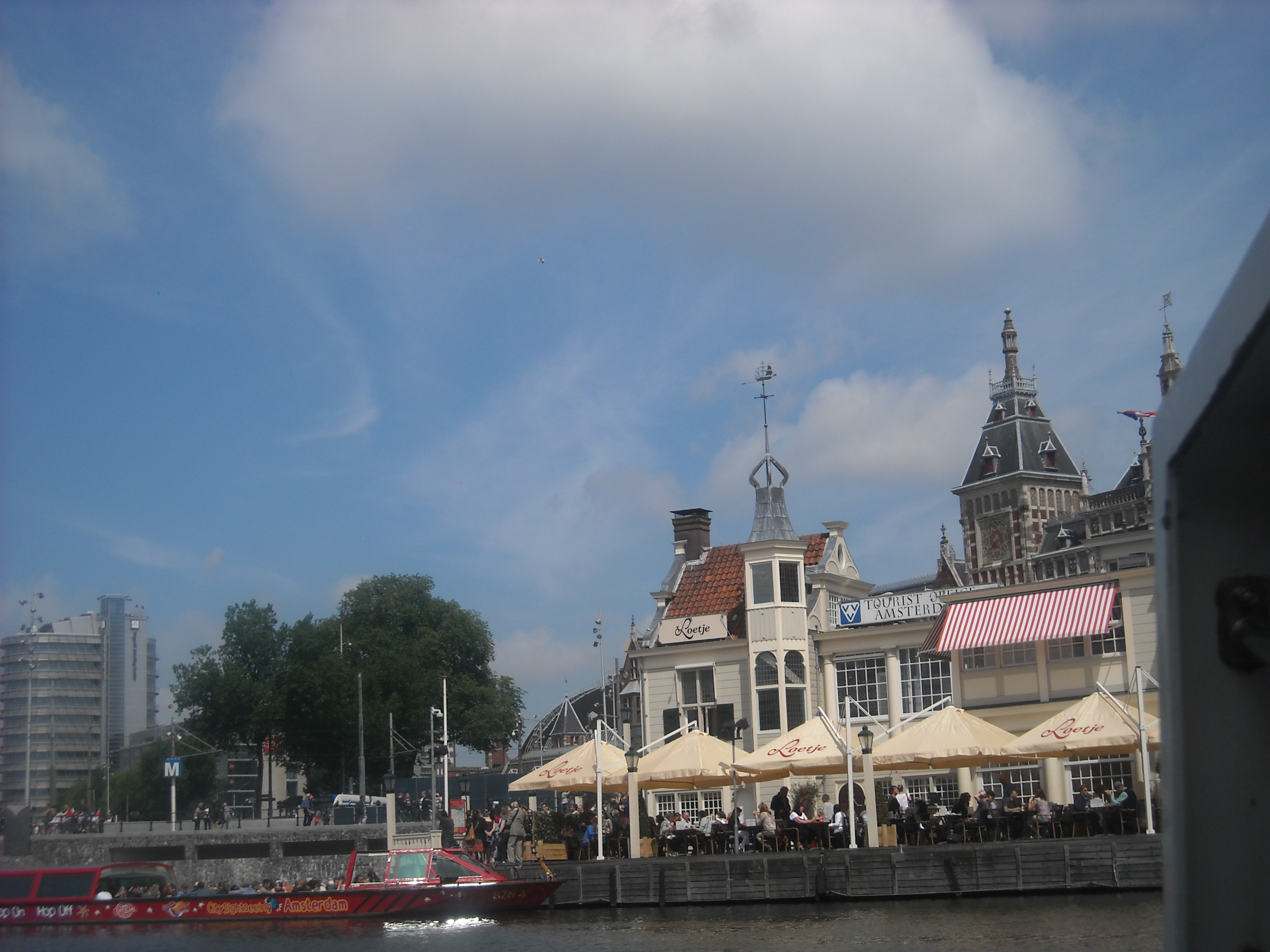
The view from the canal--another canal tour!

The view from the canal–another canal tour!

This is sort of a no-brainer, but worth it, especially if you have an engaging–and cute!–tour guide. He, of ourse, was actually the same guy who offered me champagne in the marina in Hoorn (he told me which boat he’d be on the next day, and where). It’s a hop-on, hop-off tour–pay 22 Euros for a 24-hour pass and you can get off at the Anne Frank house, wait in line for the three hours it generally takes to get through the queue, and then get on again to continue your trip. You can also get off or on at Central Station, Leidsestraat, Museum District, and City Hall. I ended up stayed on for almost three go-rounds–by the time I was finished, the guide was handing me the mic and letting me give the tour!

For me, the highlights were the view of the curch steeple where the ladies used to watch for their young men who went to sea (swoon, so romantic!) and the hundreds of canal boats that used to haul cargo on the waterways, but that have now been converted to the most popular real estate in Amsterdam.

9. Scheveningen, The Hague

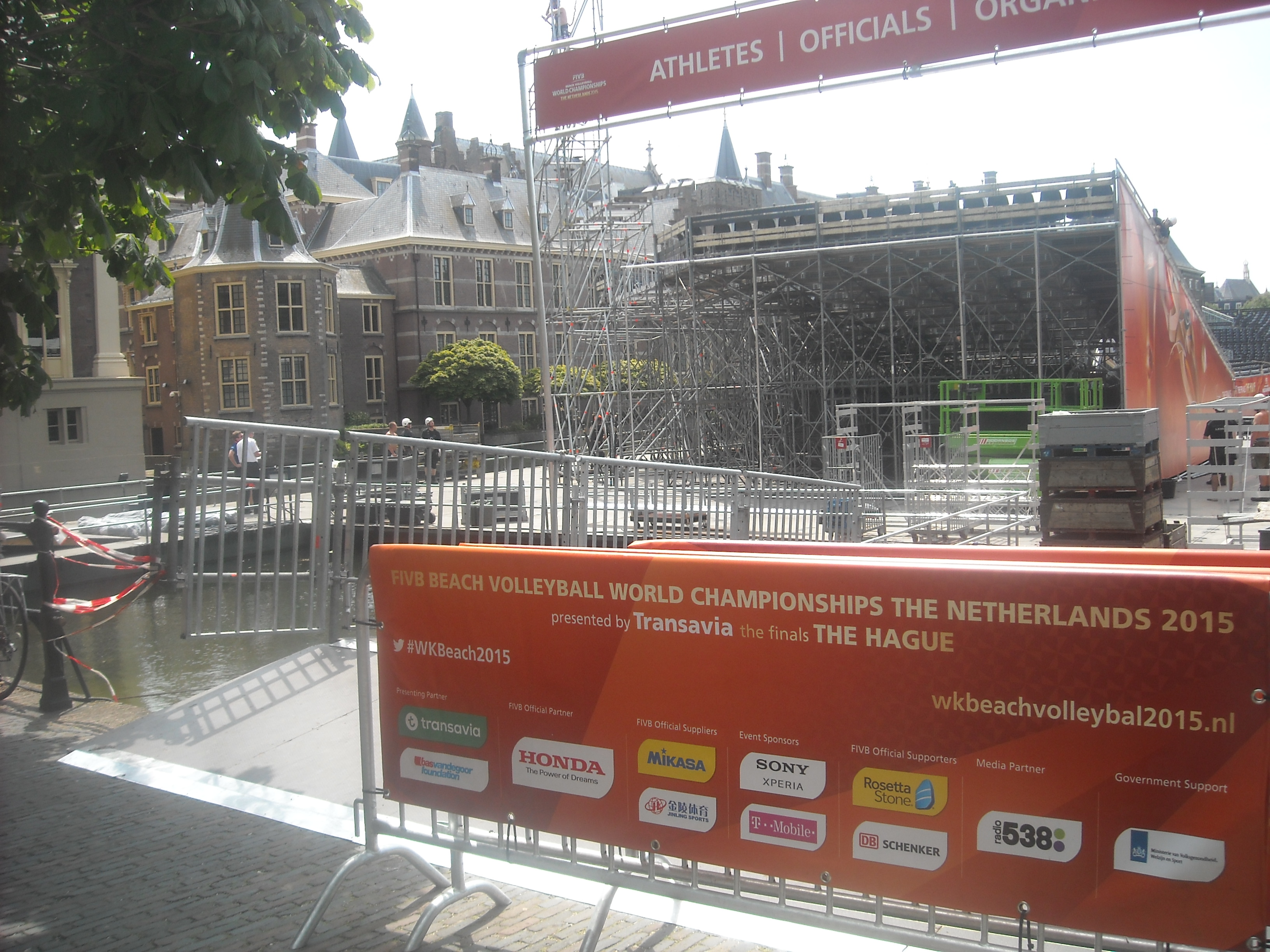
The world championships of beach volleyball were going on while i was there.

The world championships of beach volleyball were going on while i was there.

This may not be the end of the world, but it feels like the end of the Netherlands. A former fishing village turned Belle Epoque bathing resort, it’s technically a district of The Hague. There’s also a popular piano bar on the beach there, Crazy Pianos, though unfortunately, we didn’t get there in time to see the pianist. But luckily, on a beautiful summer night in late June, you can watch beach volleyball players and surfers–yes, surfers! in Holland!–and feel like you’re somewhere very far away from home indeed.

Of course, my friend and I had to test the water, which was, of course, freezing–shattering my illusions that I had magically been transported back to the South Atlantic. But you can still enjoy a beer or five and a fresh seafood meal, and delight in the knowledge that you’re enjoying this country at its summery best.

The Hague (like every Dutch city) is delightfully compact, so it’s not hard to get to from wherever you’re staying–just walk toward the water, look for the Grand Hotel, and you’re bound to find it.

10. PANORAMA MESDAG, The Hague 

One angle of the Panorama Mesdag.

One angle of the Panorama Mesdag.

When Oh Captain first told me about this; I had no idea what I was about to see. When I arrived, the guide gave me a free audio tour and told me to hang around in the lobby long enough for the big group that just went up to see the panorma to disperse. Downstairs, the museum is a remarkable introduction to 19th-century The Hague school of painting, which was founded by Hendrik Mesdag. He specialized in moody, dark-toned scenes of rumpled fishermen and their wind-powered vessels, which had to be towed upon to the beach by horses (more of these paintings can be viewed in the Rijksmuseum (below), and reveal a bygone way of life. Sadly, none of these boats seem to exist anymore–except for the ones converted into houseboats in Amsterdam.

DSCN1766

An example of a Hague School painting.

As I made my way up the rickety wooden staircase, I noticed light filtering in from the canvas, changing the view depending on what the weather is like outside. Sanding inside, turning around in this 360-degree canvas, which Mesdag completed with the help of his wife, in 1881, you genuinely feel like you’ve trudged up a sand dune and emerged in 1881. It’s like seeing all of Scheveningen laid out before you–bathing machines on one side, fishing boats on the other, evoking a bygone time.

11. The Rijksmuseum, Amsterdam

The Prins Willem, who sailed from Middelburg to the East Indies in 1651.

The Prins Willem, who sailed from Middelburg to the East Indies in 1651.

After you see the Night’s Watch, the cavernous Rijksmusem holds numerous treasures for the ship geek. I was staying only a few blocks away from the Museum District with another friend (ship friends are more valuable then you could ever imagine!). I enjoyed seeing the ship’s model of the Prins Willem, and treasures from the Dutch colonial period.

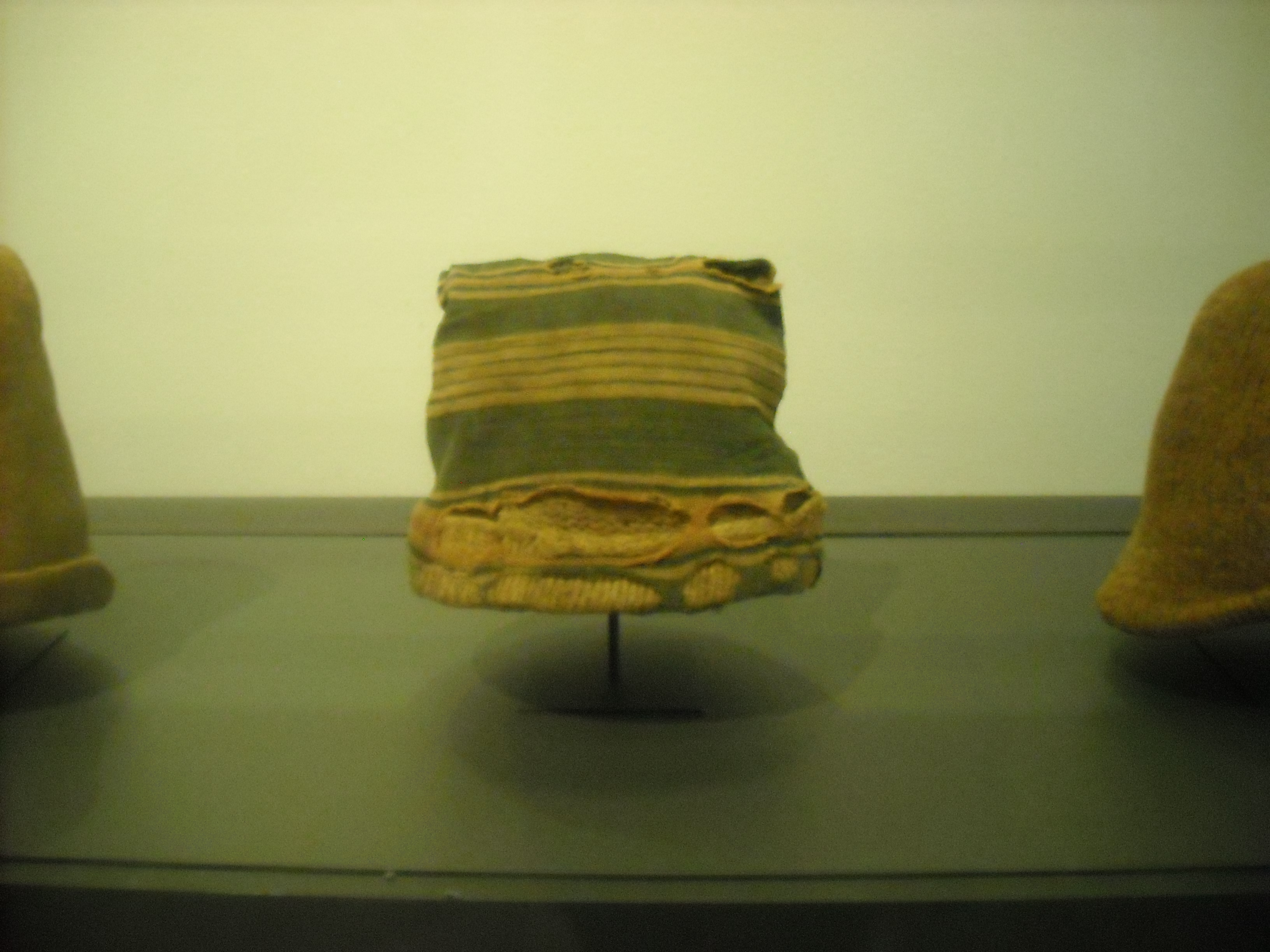
The hats of the unfortunate frozen whalers.

The hats of the unfortunate frozen whalers.

Most poignant was the rather grisly display of knit caps that were worn by a 17th-century whaling crew who froze to death in Spitsbergen, identified only by the patterns thereon–both in life and in death. Like the “weeping tower,” it reminds me constantly that unlike today, sailing wasn’t all fun and games. The jolly bold sailors of the past (and their women) paid a steep price for following the wind and earning their coin. But they did it anyway, and that’s why we love them.